Labradorite Meaning, Properties & Full Crystal Guide
Labradorite is a feldspar mineral known for its extraordinary optical phenomenon: labradorescence. Beneath its grey-green surface, flashes of blue, gold, green, and violet appear and disappear as the stone shifts in the light. This play of colour is caused by light scattering through internal layers of the mineral. Labradorite was named after Labrador, Canada, where it was first documented by Europeans in the 18th century, though Inuit peoples had worked with it for far longer.
What Labradorite means
Labradorite is the stone of transformation, magic, and the spaces between the visible and the unseen. It is associated with the throat and third-eye chakras and is used to support change, strengthen intuition, and protect the aura during periods of deep inner work. If you are at a threshold in your life, going through a shift that feels both necessary and disorienting, labradorite is a companion for the crossing. It does not make change easier exactly. It makes it feel less alone.
How to use Labradorite
Hold labradorite during meditation and let your gaze soften on its surface, following the colour as it moves. Use it in ritual at moments of transition: new beginnings, endings, or significant decisions. Keep a piece near your workspace if you work creatively, as labradorite is known to support imagination and original thinking. It is also used in dreamwork: place it beside your bed with an intention to receive clear, vivid dreams. Cleanse labradorite with moonlight or a brief pass of sage smoke.
What Labradorite pairs well with
Moonstone and labradorite share a watery, liminal energy and work beautifully together for intuition rituals. Clear quartz amplifies labradorite's transformational qualities. Selenite helps hold the space when labradorite's energy feels too expansive.
Pieces to work with
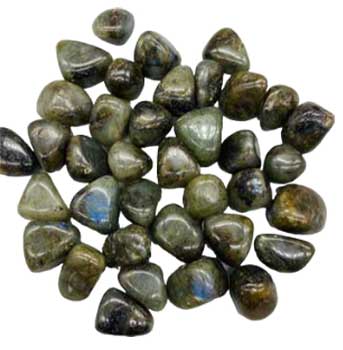
Keep reading
Bring labradorite into your practice.
Shop crystals & stones